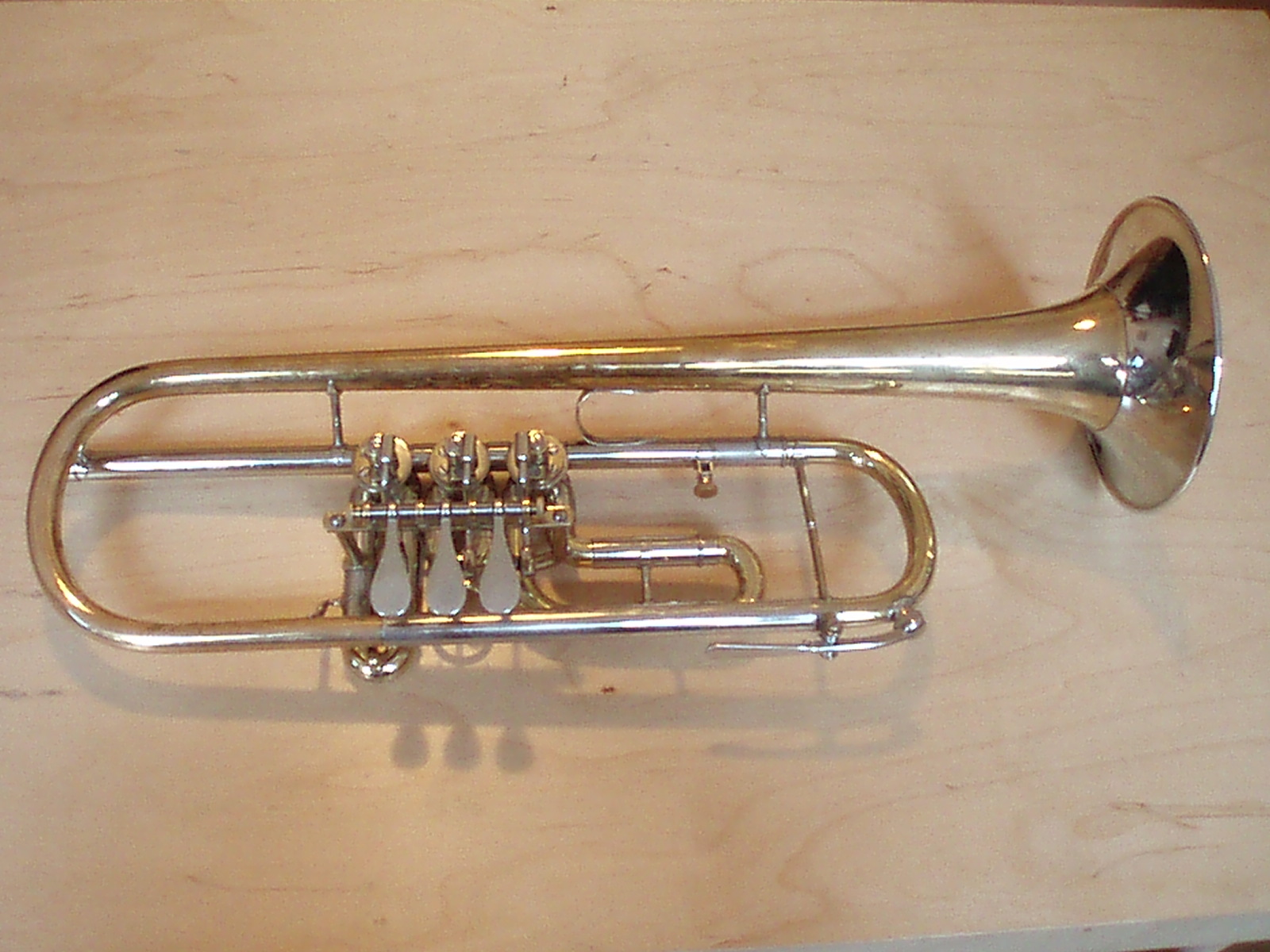
Die Trompete hat immer mir gut gedient, bis meine liebe Frau entschieden hat auch Trompete zu spielen. Und sie hat mein Instrument geklaut...
Das ist meine erste Trompete, jetzt von meiner lieben Frau benutzt:
Hier ein paar Beispiele, wie meine alte Trompete gespielt hat:
 eine Tonleiter eine Übung von Clarke
Nun hatte ich das Problem, eine neue Trompete für mich zu suchen. Nach einer langen Suche hat mir der Freund, der mir das neue Schallstück auf die anderen Trompete gebaut hat, das Angebot gemacht, eine für mich angefertigte Trompete zu bauen. Da er eine exzellente Arbeit gemacht hat, möchte ich die Historie dieser Arbeit ins Internet stellen.
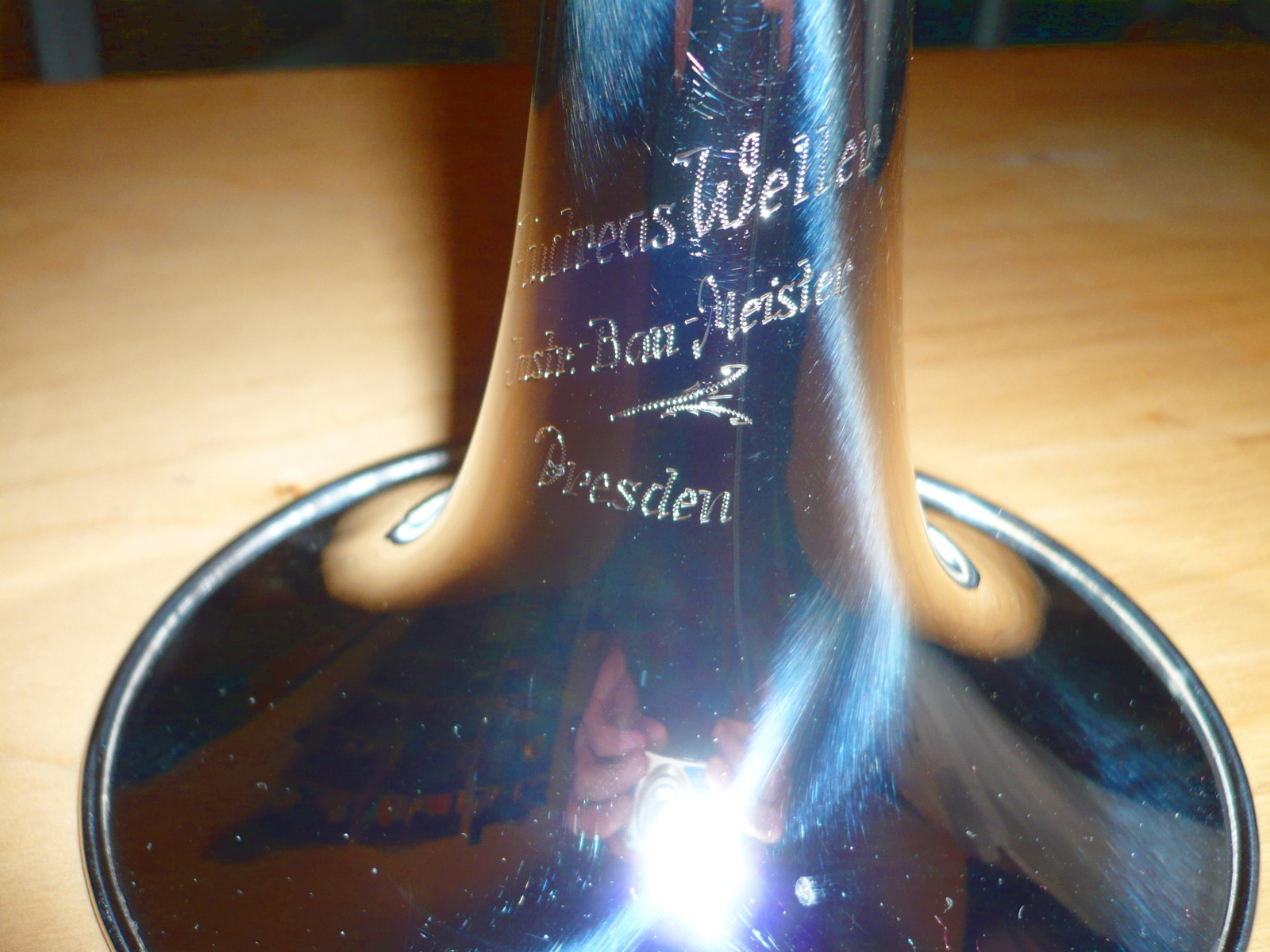
Um ihm eine gute Werbung zu machen, da er es verdient hat, der Freund heißt Andreas Weller und hat seine Werkstatt in Dresden.
Blechblasinstrumente
Mohnstr. 50 - 01127 Dresden
Tel.: (03 51) 8 48 98 97 - Fax: (03 51) 8 48 98 97
Dies ist die "Maschine", also der Teil der Trompete mit den Ventilen, die nötig sind, um eine chromatische Tonleiter spielen zu können:
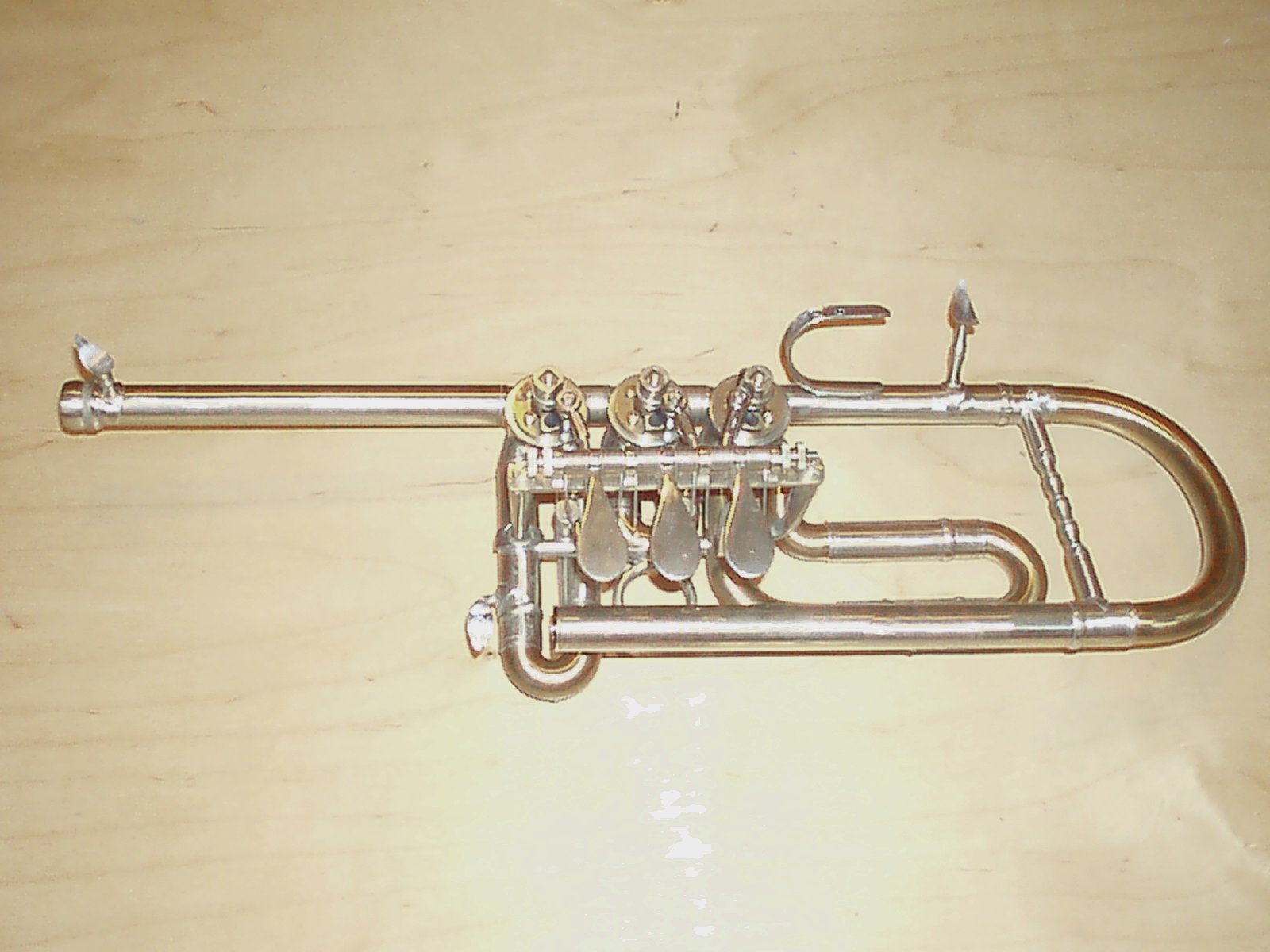
Um klar zu sagen, falls es auf dem Bild nicht deutlich zu sehen ist, hat die Maschine "Minibal"-Gelenke.
Nun hatte ich 3 verschiedene Schallstücke zur Verfügung, die ich an der Trompete einbauen lassen konnte:
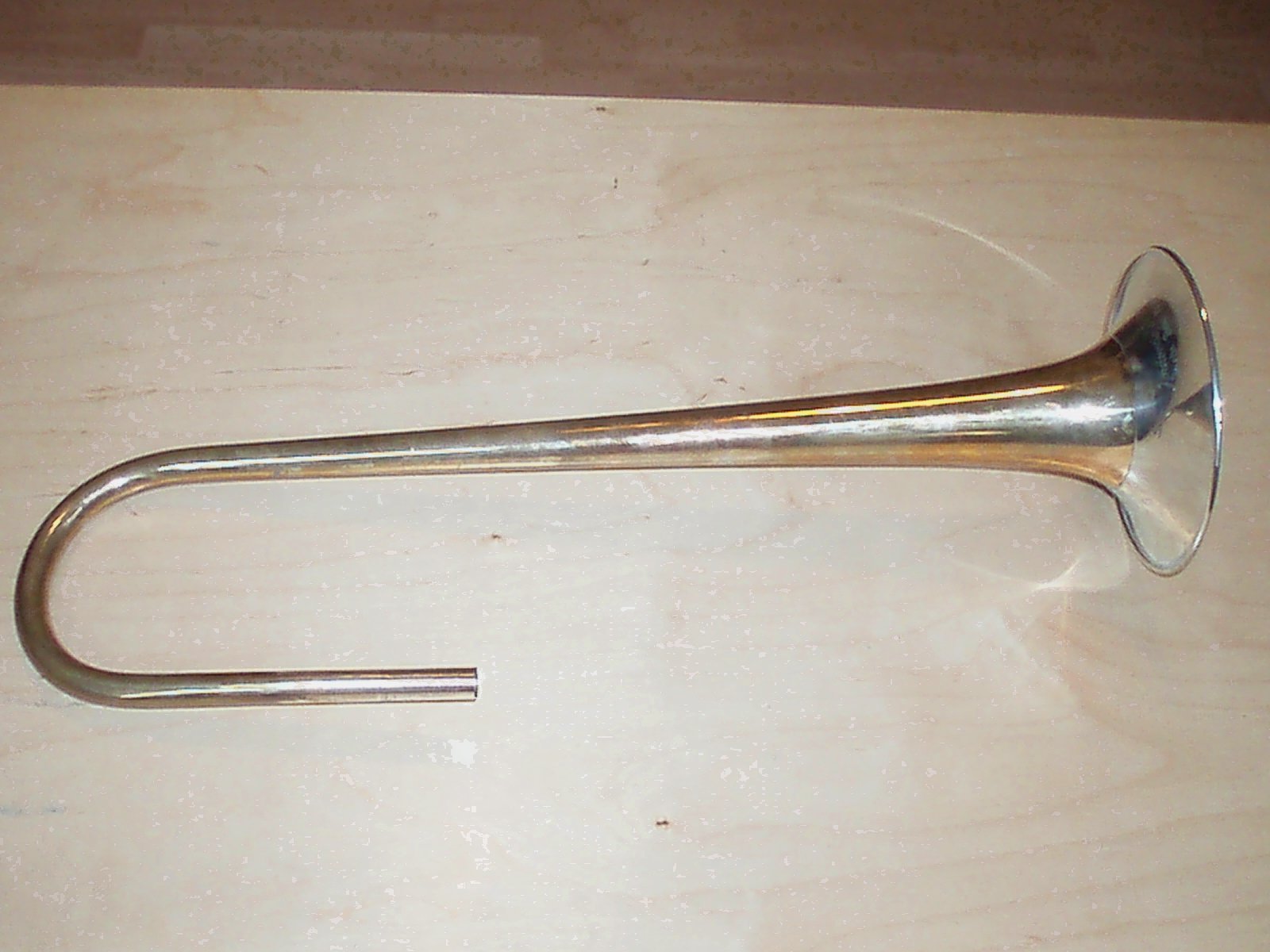
Schallstück aus Goldmessing (85% Kupferanteil) mit Silberkranz. Durchmesser 135mm
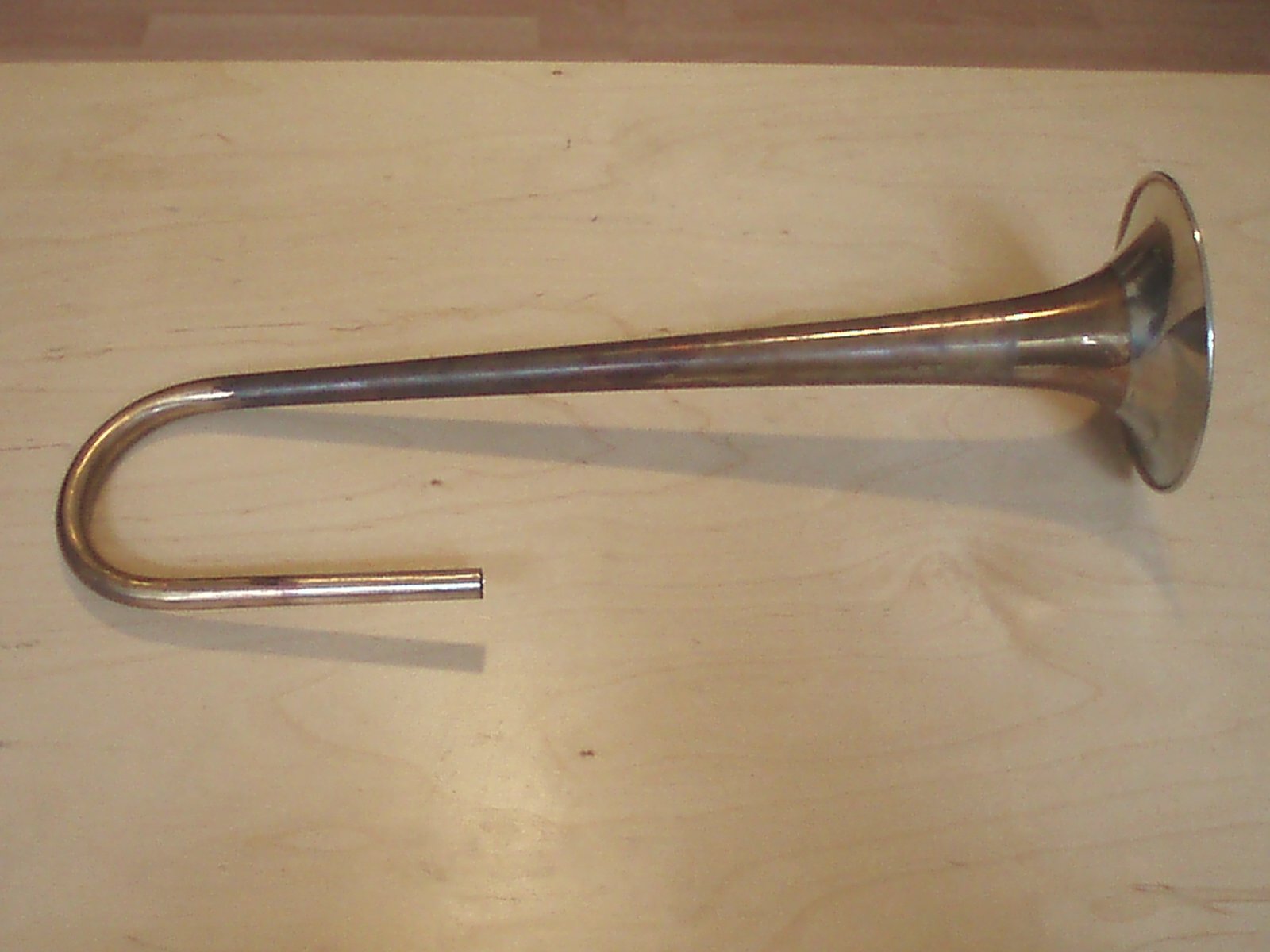
Schallstück aus Rotmessing (95% Kupferanteil) mit Silberkranz. Durchmesser 135mm
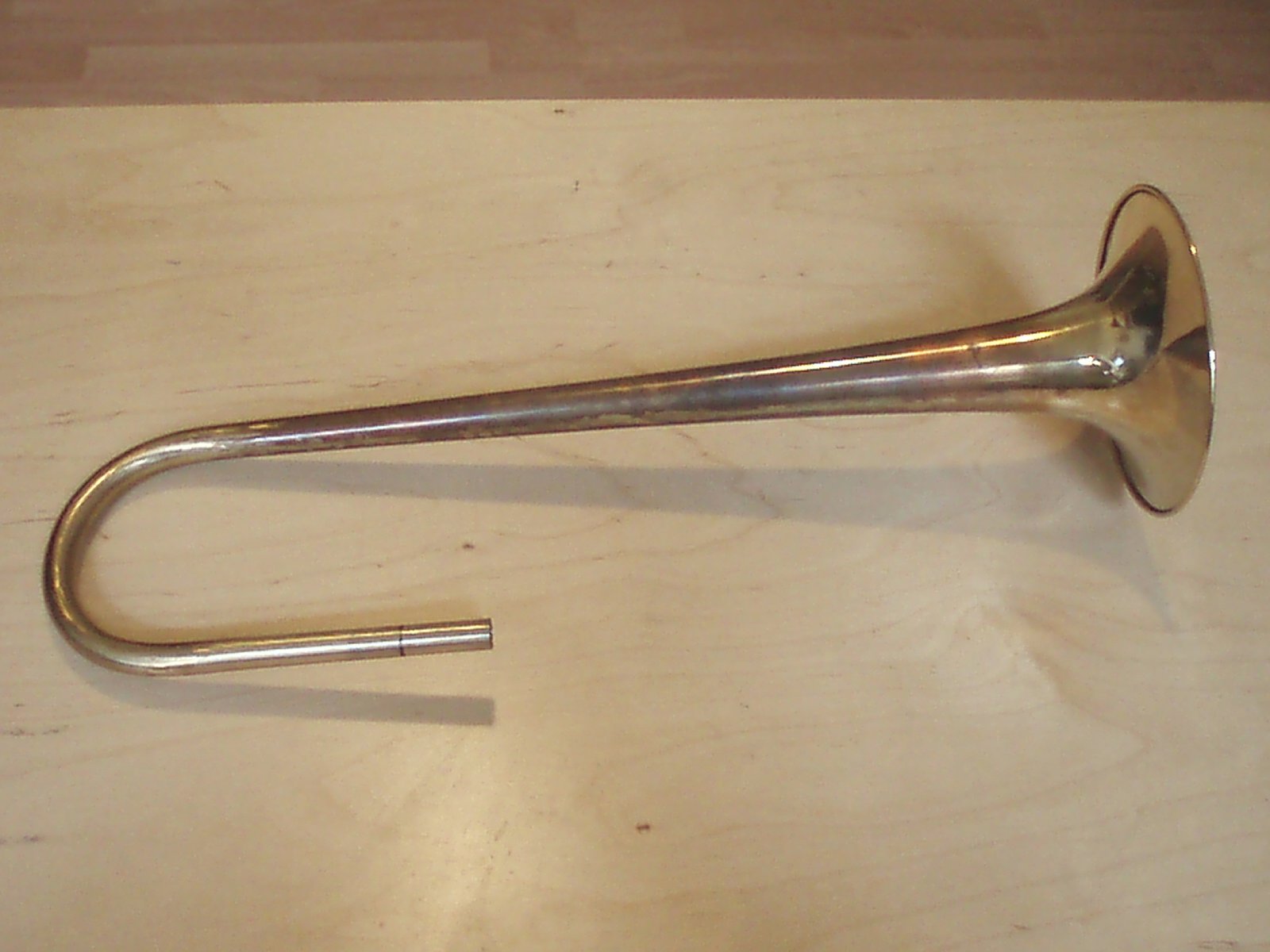
Schallstück aus Goldmessing (85% Kupferanteil). Durchmesser 140mm
Danach sollte ich ein "Mundrohr" wählen. Ich hatte zwei Mundrohre zur Verfügung:
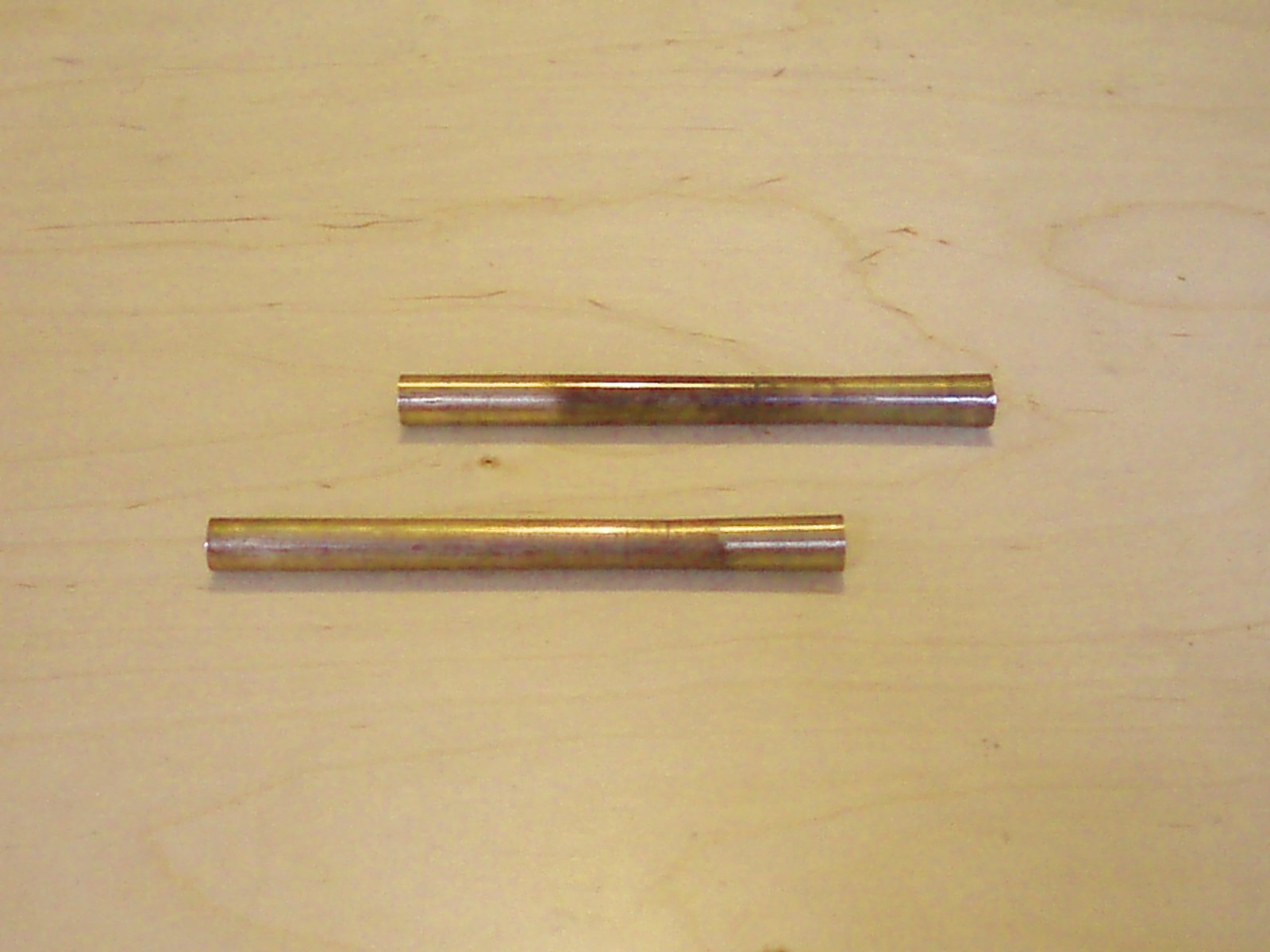
Nach einer langen Probezeit, mit Hilfe meines Trompetenlehrers, habe ich das Schallstück aus Goldmessing mit Durchmesser 140mm und das schmale Mundrohr gewählt.
Die Trompete sah so aus:
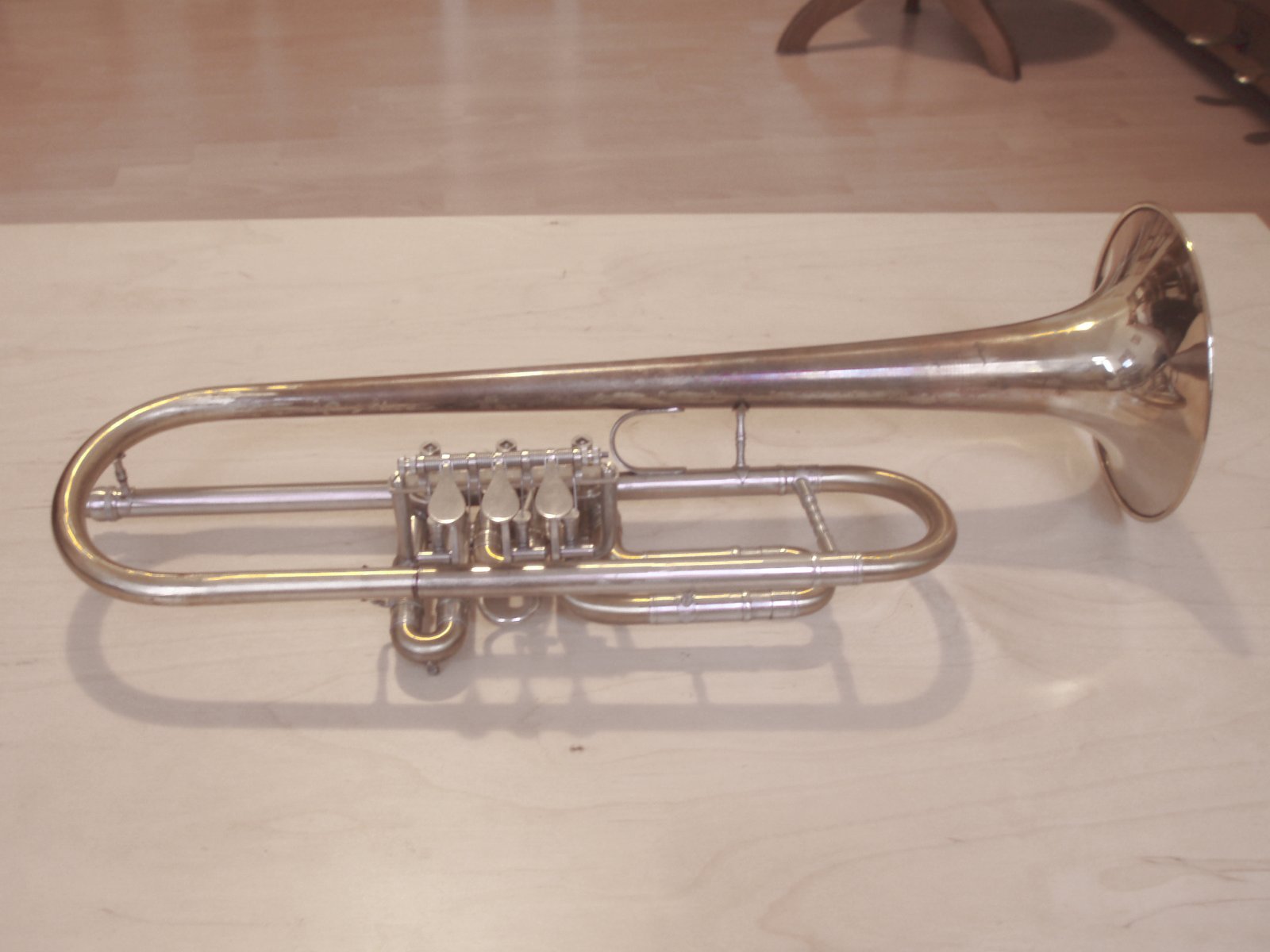
Nun habe ich die Trompete dem Freund gegeben, um alle Teile zusammen zu löten und den ganzen Rest (Stimmzug am dritten Ventil, Wasserklappen, Überblasklappe, usw.) einzubauen.
Die Trompete, fast beendet, sah dann so aus:
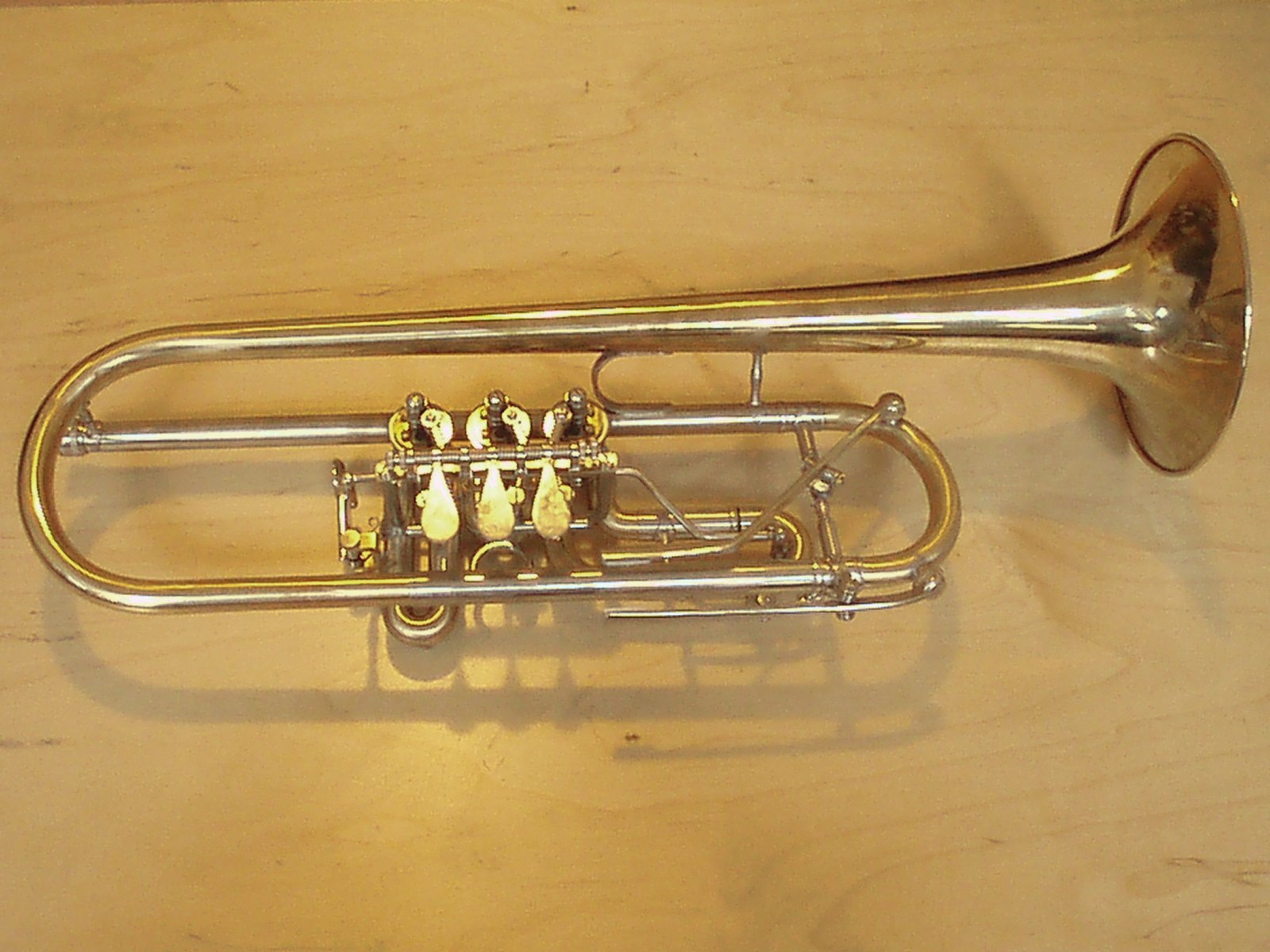
Nachdem ich sie nochmal probiert habe, um sicher zu sein, dass alles in Ordnung ist, ist das Instrument zum Versilbern (12μm, auf einer sehr dünnen Schicht Gold, da Silber nicht fest auf Messing fixiert werden kann) geschickt worden.
Da mir der Stimmzug am dritten Ventil etwas unbequem war, wurde er von oben nach unten verschoben.
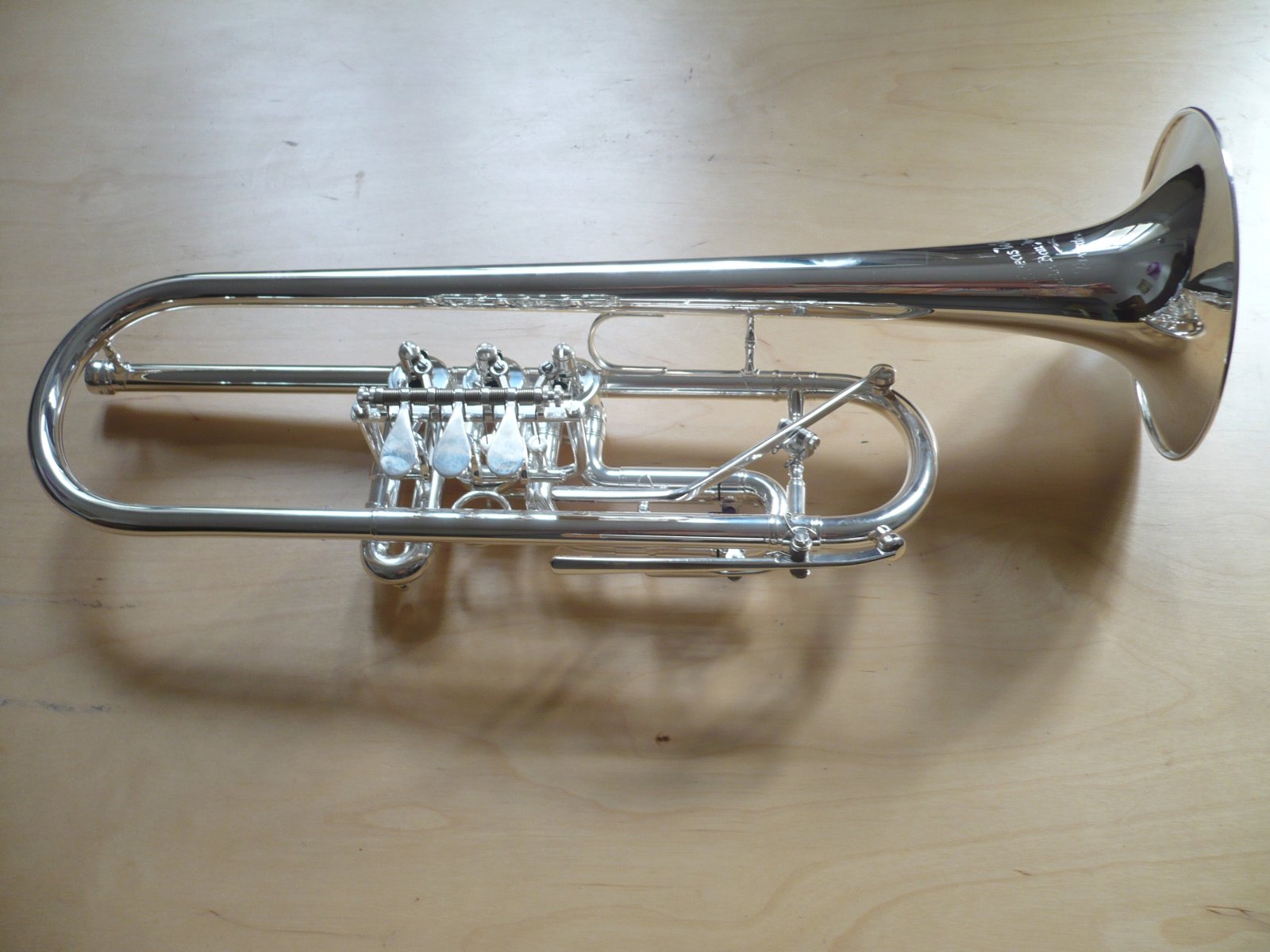
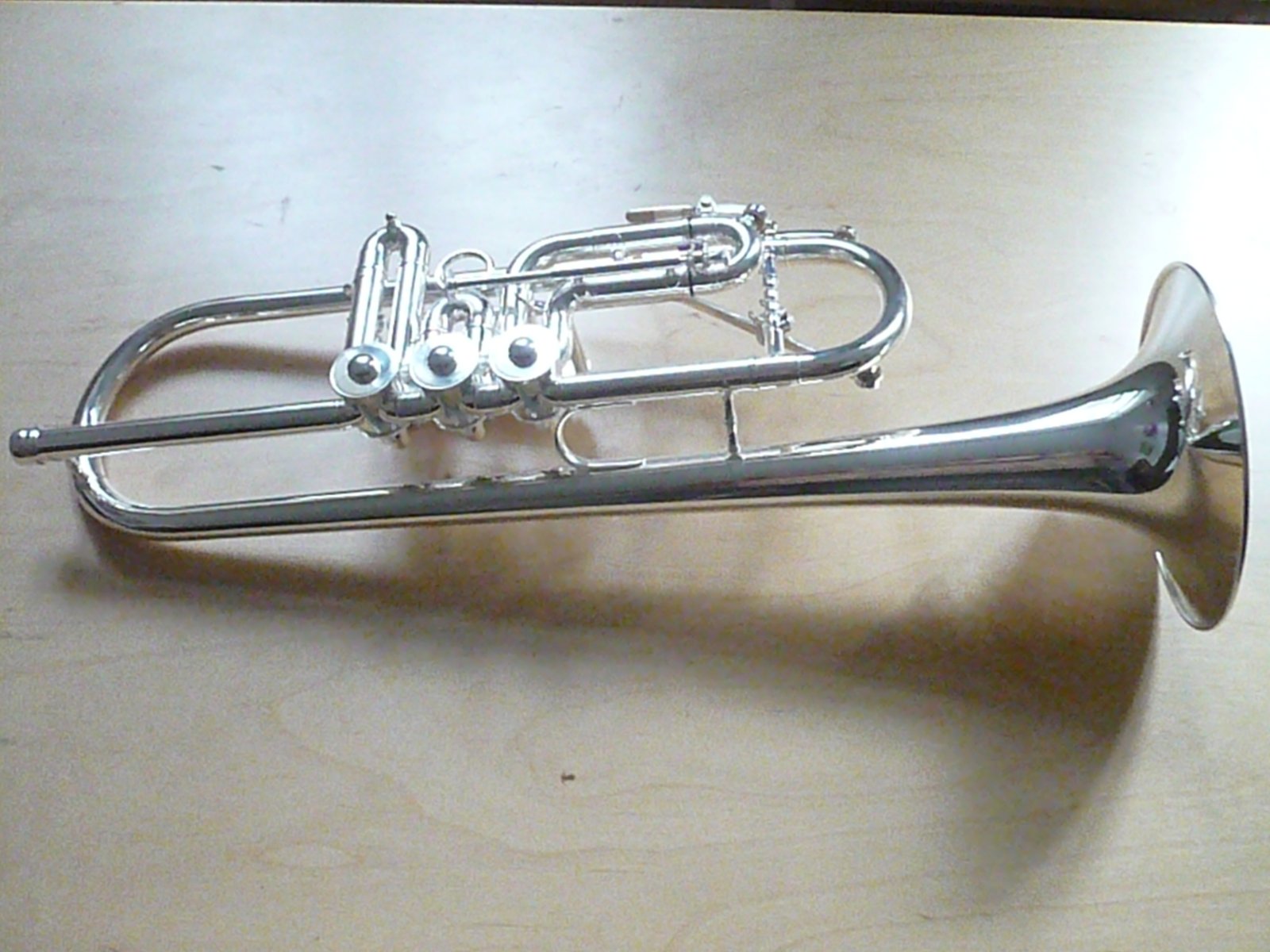
Die Trompete ist nun fertig und bereit im Konzert (mit großem Vergnügen!) gespielt zu werden!
Und hier ein paar Beispiele, wie meine neue Trompete spielt:
eine Tonleiter eine Übung von Clarke